August 2020
proyectoamil
Lima
Most cultural institutions, including proyectoamil, have been forced to pause their activities due to the current situation and to re-prioritize and re-think our content, program, efforts, and life itself. During the lockdown, we invited our friends and people closest to the institution, artists, curators, thinkers, museum and art center directors, and cultural managers to participate in Looking Forward. We requested them to send us a reflection, it could be a drawing, text of any kind, poem, recorded audio or audiovisual about what they think and feel, inspired by the moment we are living. Among the colleagues invited to share their reflections are Rosa Barba, Luz María Bedoya, Phillippe Gruenberg, Pablo Hare, Esteban Igartua, Fátima Rodrigo, Daniel Roque, Sandra Salazar, Simon Schwyzer, Richard Tuttle, Giancarlo Valverde, José Vera, among others.
The lockdown and social distancing due to the pandemic, in some cases, have accelerated changes that had already begun or that inevitably had to occur, such as remote work or adaptation to new technologies. They may have united or distanced us from our families and community depending on the conditions of quarantine and distancing; having given us time to rethink our work, daily life, relationships, and the future. But the pandemic and confinement have also generated an emotional and economic cost due to human and job losses and the feeling of an uncertain future.
We would like to understand how our colleagues face this sort of parenthesis that, despite being a very complicated moment, opens the opportunity to explore the potential of art for a radical impact and change. It gives us the space to think, reflect, and evaluate resilience and start acting to reinvent ourselves, see new ways of showing work so the crisis ends up working as a catalyst for ideas and projects.
Some of the issues that we asked our guests to think about: What do you think of online platforms to bring artists’ work to audiences in confinement or social distancing? Of the experience of bringing art to the homes in a remote way? How do you see your practice in the future, post-pandemic? Galleries, museums and fairs? The amount of online content?
Since August 10, we present a piece every Monday.
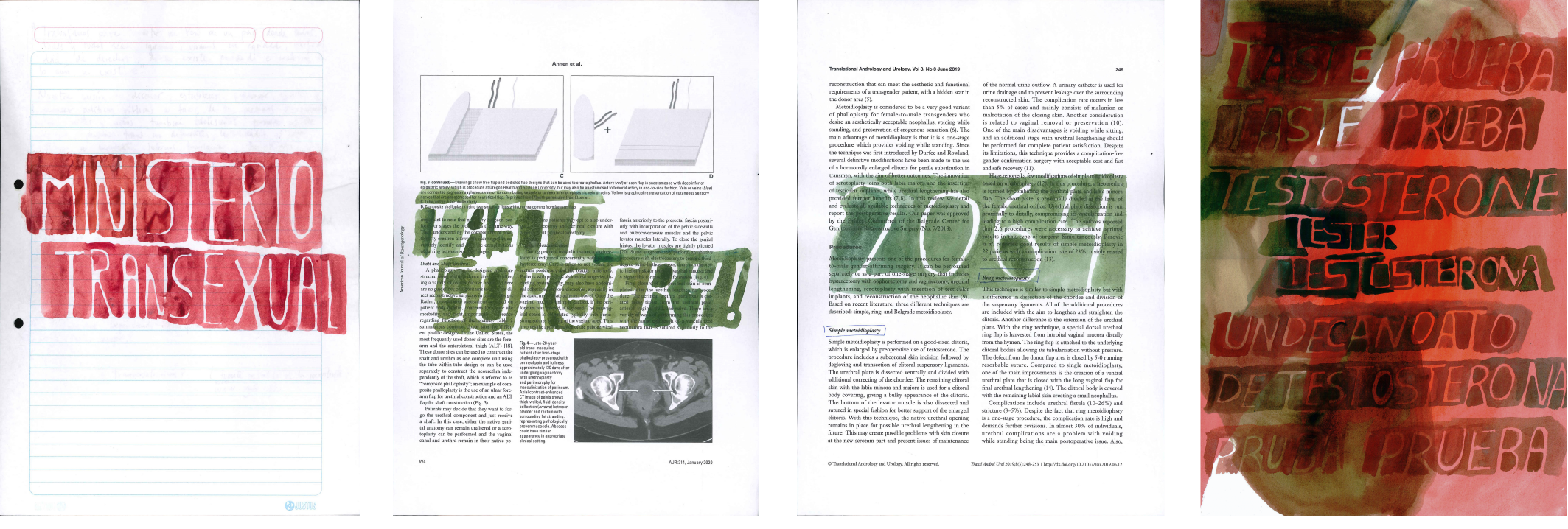
The Peruvian artist Raúl Rustoy, shares with us images of a mural he painted in Jirón Quilca (Lima), regarding the massive protests that took place in November in Peru. See more
The Peruvian artist María Abaddon presents some family portraits and part of a project he worked on during the isolation time in Lima. See more.
The Peruvian artist Fátima Rodrigo shares with us an animation based on handmade drawings and a text which explains her work. See more.
The Peruvian artist Ximena Garrido-Lecca shares with us “Tierra”, a short film recorded in Apurímac, Perú. See more.
The Peruvian artist Carla Reyes Vercelli shares with us her reflection, it includes five images and a text. Carla is currently participating in Haciendo Contexto IV, our contemporary art lab for young upcoming artists. See more.
The American artist Sheila Hicks shares with us an image of some of her work. See more.
The Peruvian artist Andrés Marroquín shares with us six poems resulting from an anecdote while working along with the poet Andrés Hare on the edition of “El ideal es la telepatía”. See more.
The Peruvian artist Krizia Zurita shares with “De mayo a mayo”, a visual exploration of the urban imaginary through drawing in motion. Krizia is currently participating in Haciendo Contexto IV, our contemporary art lab for young upcoming artists.
► Watch the video here.
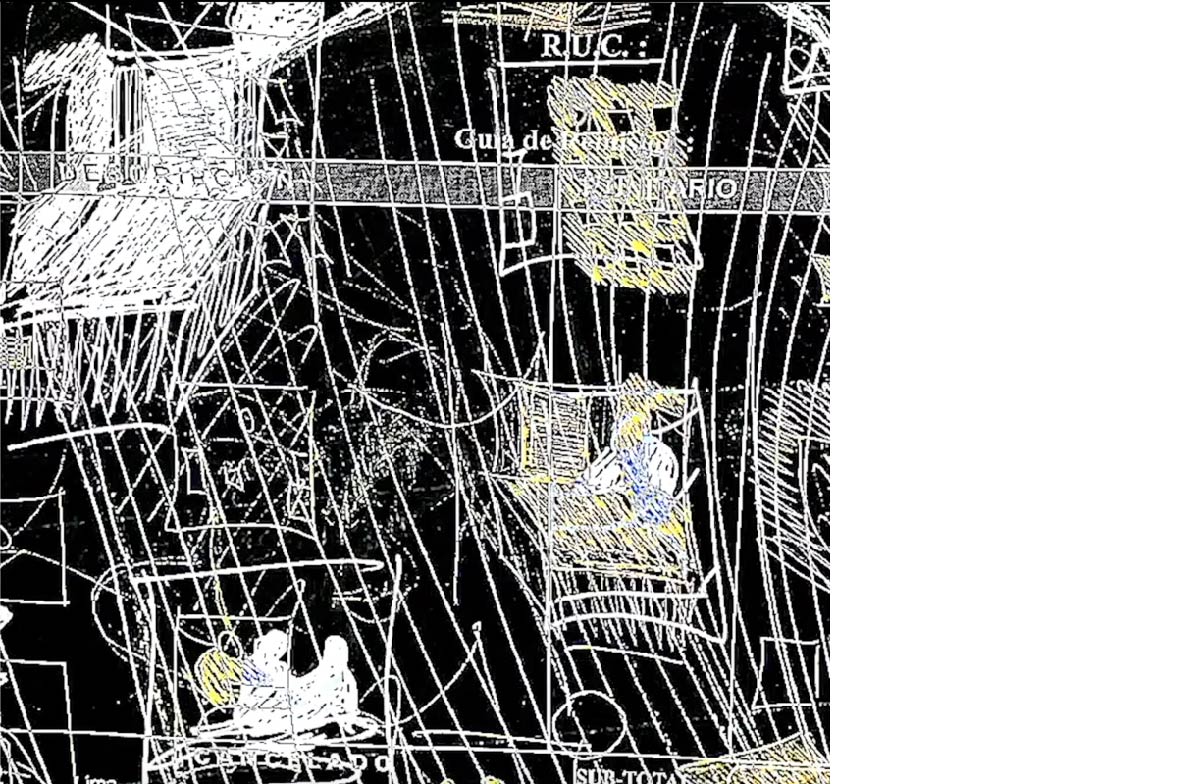
The Italian-German artist Rosa Barba shares with us excerpts of her publication “Printed Cinema #20”, apropos her latest project “Aggregate States of Matters” (2019) that was filmed in Peru.
Aggregate States of Matters
Printed Cinema #20
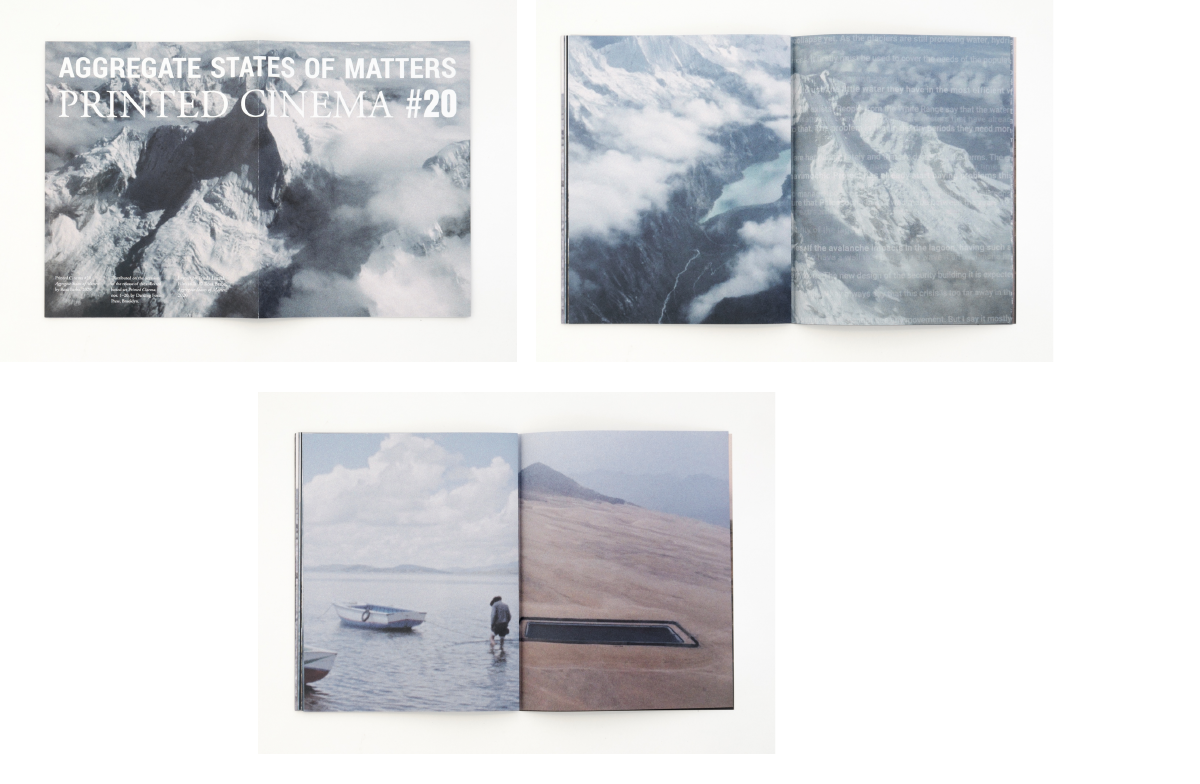
The Peruvian artist Sandra Salazar shares with us an artistic catalogue she worked on during the quarantine period. It questions her global expectations about what she sees coming in the future.
► Look at the full catalogue here.
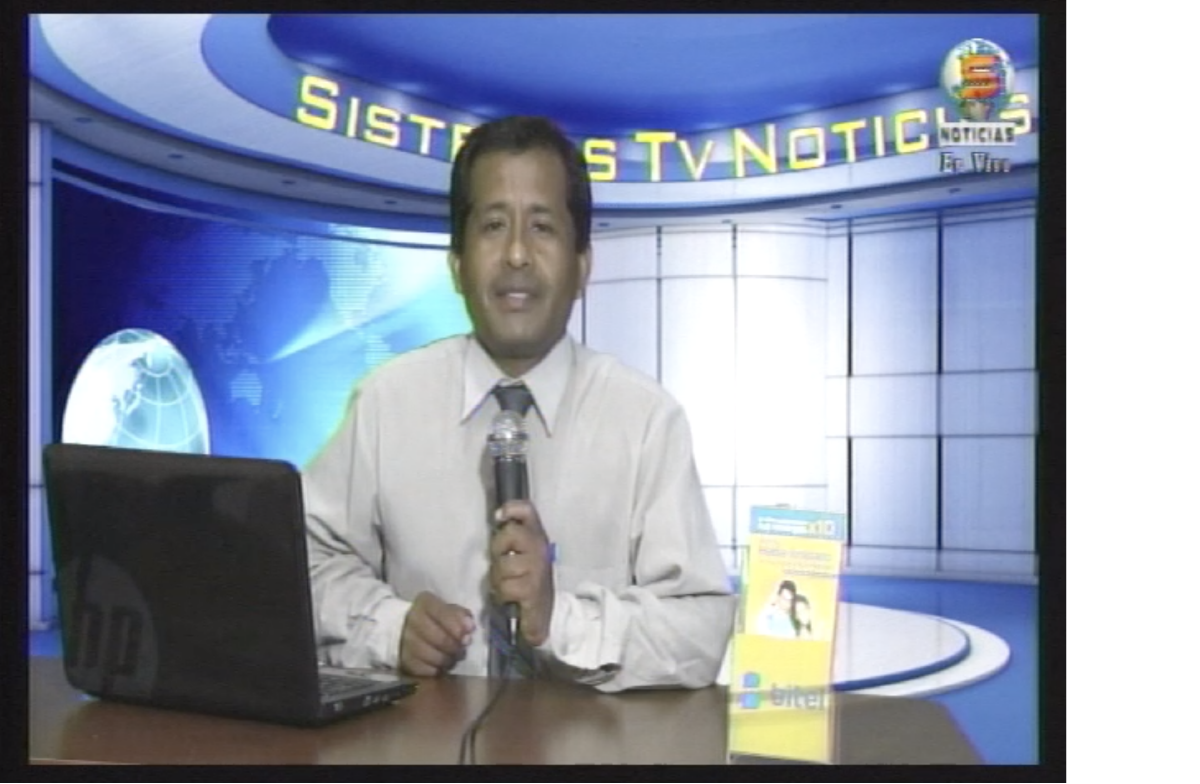
The Peruvian artist Philippe Gruenberg shares with us a documentary video part of his research for the HAWAPI project in Huepetuhe.
⠀
Huepetuhe is a small community in the Peruvian Amazon founded by immigrants from the southern Andes lured by its rich gold deposits. In the town live families and individuals who, amid corruption and violence, try to get ahead, at the cost of the depredation of one of the most biologically diverse ecosystems on the planet. In 2015 Hawapi, a cultural association, invited a group of artists, architects, and cultural managers to develop projects and intervene in the public space, in close collaboration with people from this community.
What did Maxim Holland and his team go for? is a documentary video that, through the local news coverage about Hawapi project, questions the incorporation of contemporary art into the daily life of the community and its potential as an element of change.
► Watch the video here.
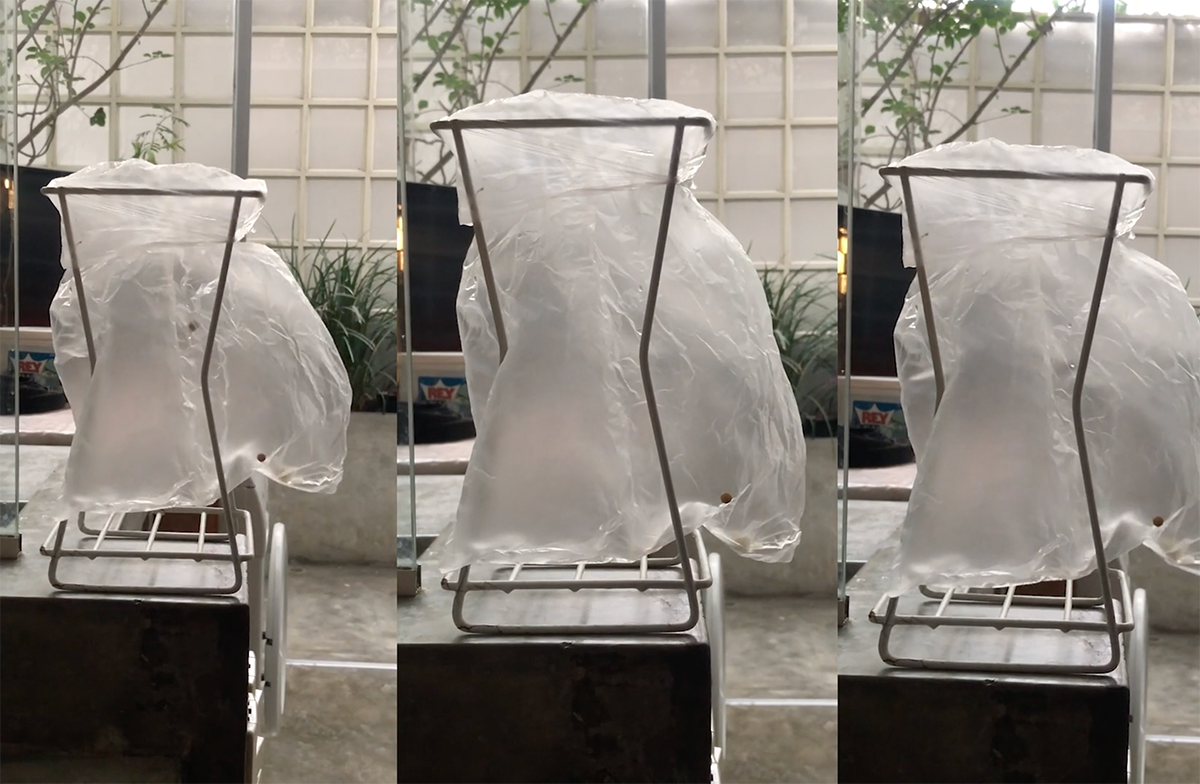
The Peruvian artist José Vera Matos shares with us Dos bambúes como micrófonos, a playlist created by him, which invites us to listen to a 13 seconds crossfade. He has also included three images to accompany his list.

The Peruvian artist Luz María Bedoya shares with us her reflection along with a binaural recorded video of 53 seconds, so she invites us to use headphones.
In the early days of Peru’s mandatory quarantine following the onset of COVID-19, while the city of Lima was blanketed in tense silence, I noticed a strange noise, like crackling charcoal, coming from the kitchen. When I went to see what it was, I encountered a small transparent trash bag held by a metal support on top of a low wall, its plastic backlit against the sun. The door to the backyard behind the kitchen was open, and the air that blew in was inflating the bag. As if in spasms, it swelled and then emptied in a trancelike process that created an almost pulmonary kind of music. What does a bag have to say? What does it show us? What traces does it leave behind? Something in the incongruity of its windy, plastic voice seemed to dissipate the statistical knowledge of all the experts ceaselessly opening in the media during the pandemic, whose sweeping calculus proved unable to put a number to the loss or prevent that which was imminent.
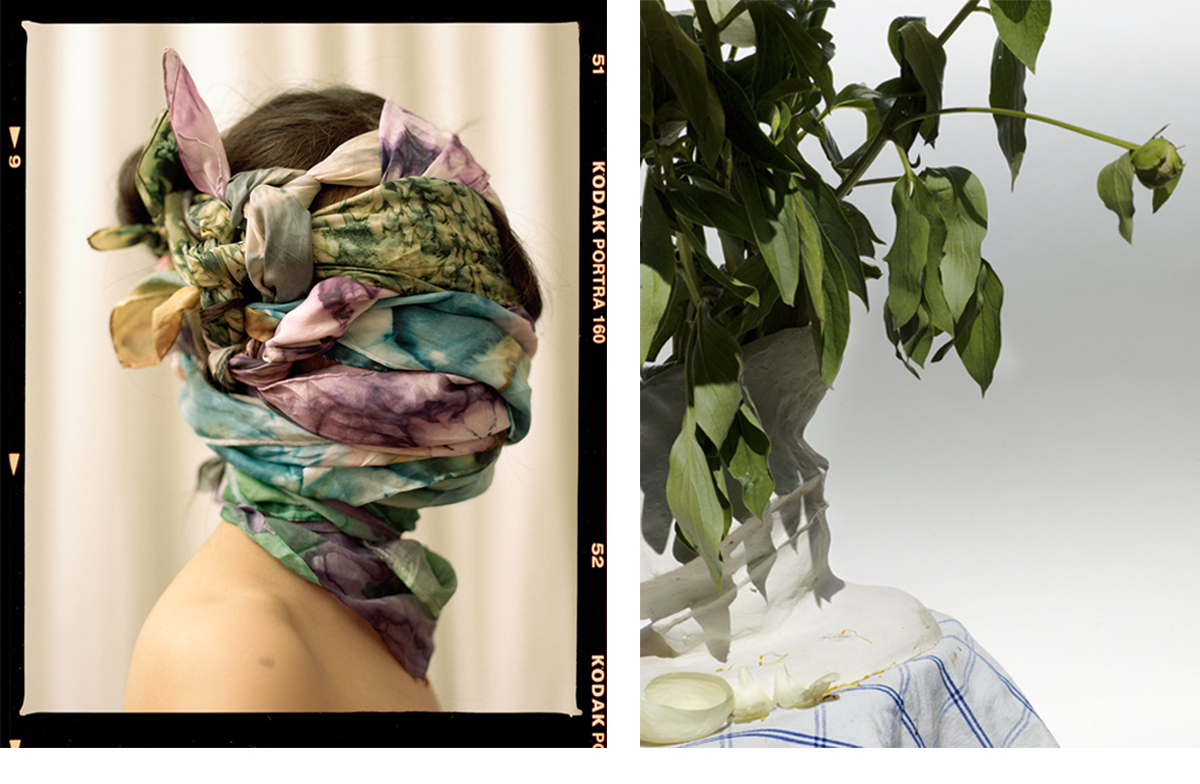
The Swiss photographer Simon Schwyzer shares with us his reflection which includes two photos.
The last few months have been proof that anything can happen. In this time my and my peers spend a lot of time inward reflecting on what it is we live in. This aspect alone has been enriching. We have to find ourselves and touch base with our inner voice.
The Peruvian artist Esteban Igartua shares with us a colored pencil drawing he worked on during the first days of the lockdown in the UK.
I am enclosing this image of a colored pencil drawing that I worked on during the early days of the pandemic here in the UK. When we were more scared and in a certain way happy to be locked in the house … About what all this implies for the future, it is difficult for me to think anything very clear. It depends on many situations that are out of my control. I suppose there is also going to be a difficulty coming back from a rather extreme routine change.
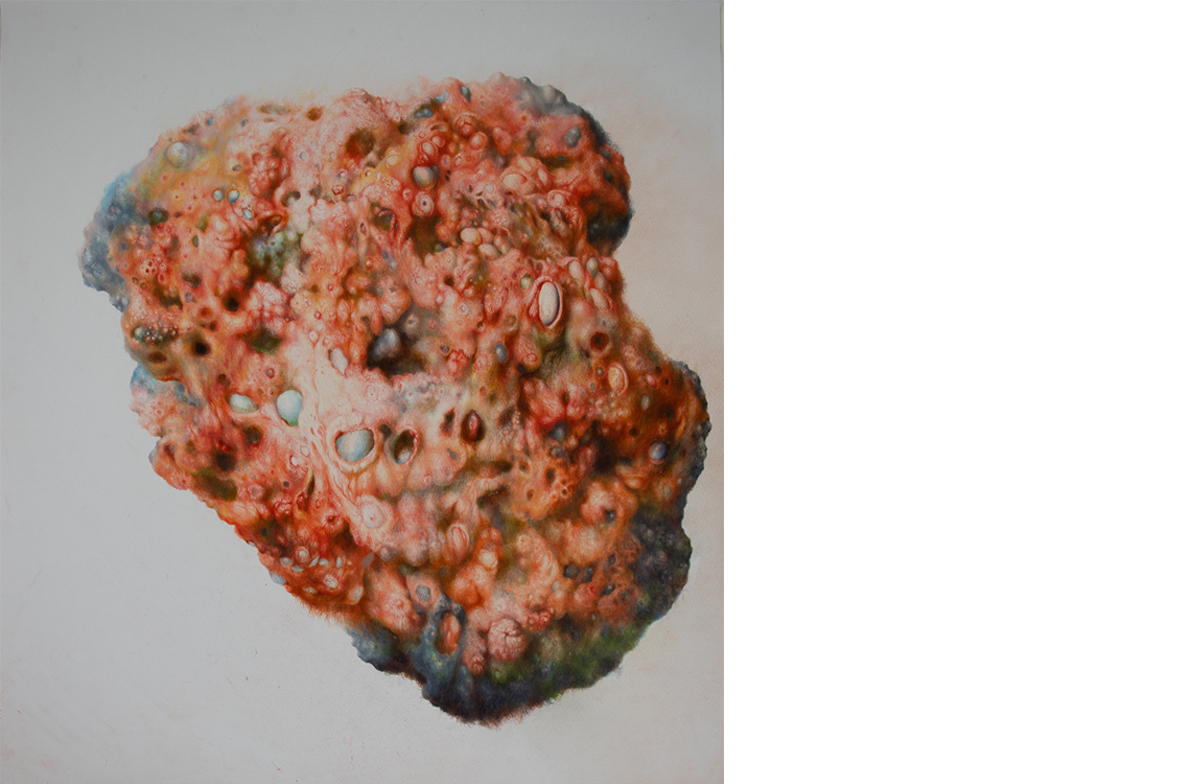
Maza 1, 2020, colored pencil on paper, 55 x 49 cms
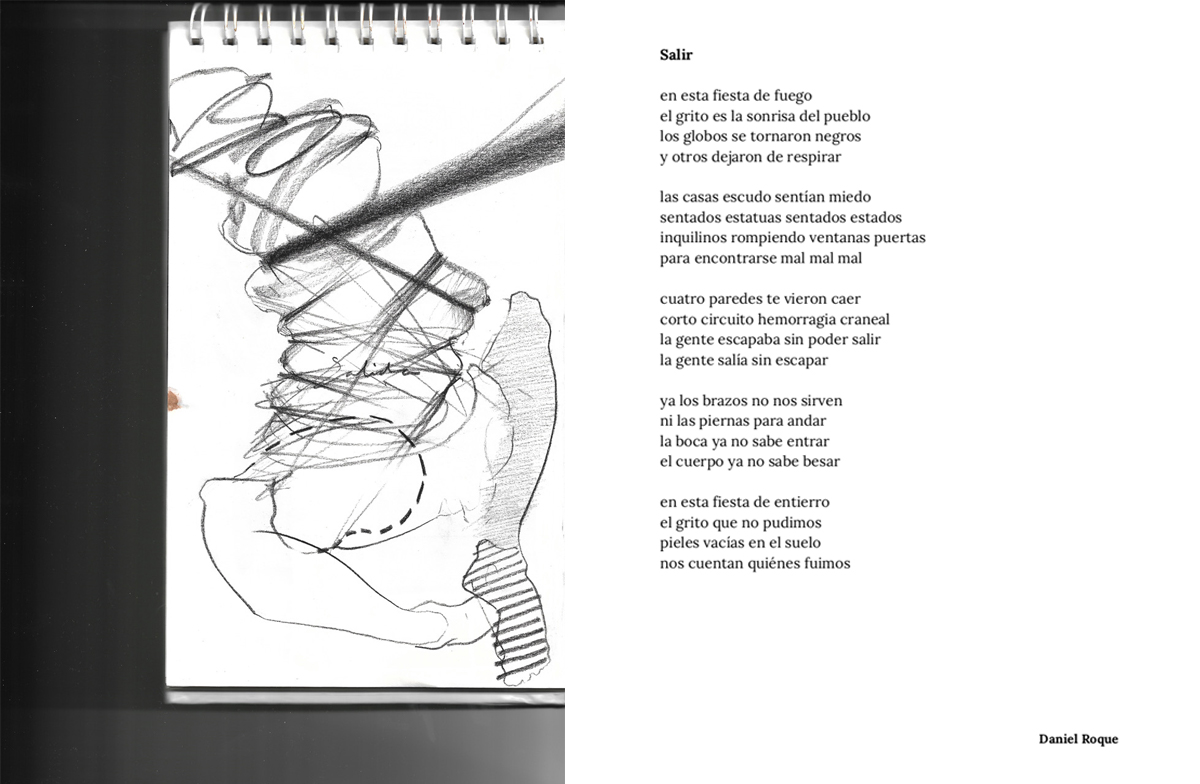
The Peruvian artist Daniel Roque shares with us his reflection which includes a drawing and a poem. Daniel is currently participating in Haciendo Contexto IV, our contemporary art lab for young upcoming artists.
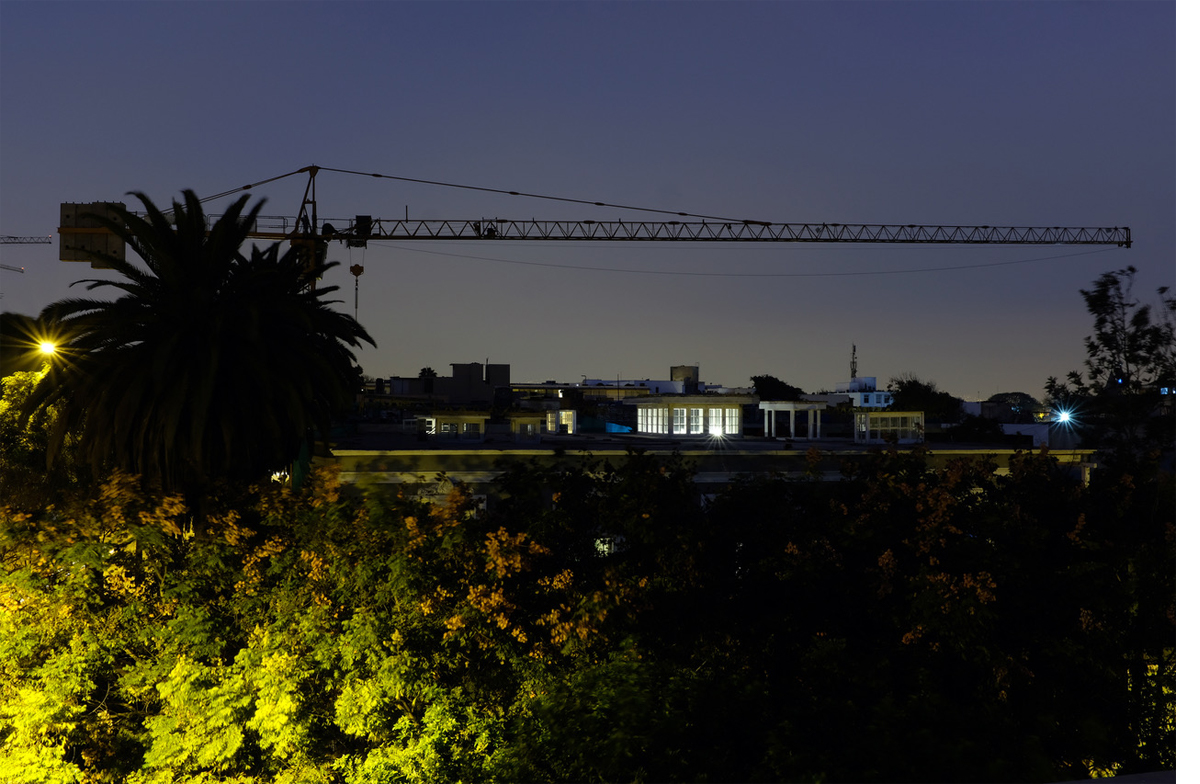
The Peruvian artist Pablo Hare, shares with us an audio track and an image that are part of a series of field recordings and photographs taken from his rooftop during March and April 2020.
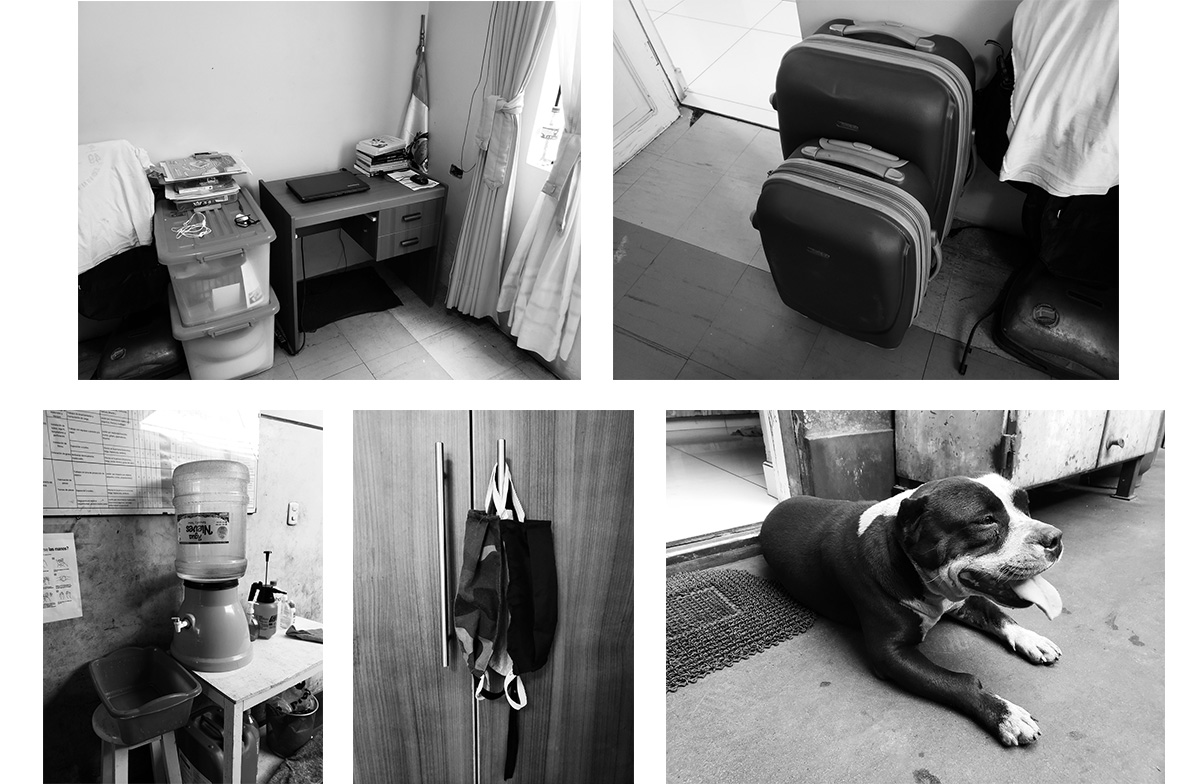
Giancarlo Valverde is a visual artist from Lima, he shares with us his reflection, it includes five photos and a text. Giancarlo is currently participating in Haciendo Contexto IV, our contemporary art lab for young upcoming artists.
I migrated from Ica to Lima in mid-2008 to study architecture, but years later I switched to Visual Art, a degree from which I graduated two years ago. But at the beginning of the first 15 days of quarantine due to the Covid-19 pandemic, I went through the conflict of returning to my city to spend the number of days of quarantine established by the government and its subsequent extensions. Currently, I have a job, which is an income for me, but it is an enigma to find out if the next semester I will continue teaching or I will be considered because unlike other teachers I have only been at this institution for 1 year. And also, the reaction of students (of schools, institutes and universities) from all over Peru to the virtualization of education is indeterminate, which at first had an economic rejection related to the prices of the fees on the payment slips, due to this type of service.
On the other hand, I continue teaching from my parents’ house in my city, accompanied by “Atila” (my dog). We are both spectators of all the reforms of different sectors due to the coronavirus with its “phases” for the economic reactivation of the country, but with an unreal flavor linked to the number of infected and dead. It is as if each phase is a different “mask” that the state uses to keep the lungs of the economy from being affected by the pandemic. However, artistic education in Peru has not been specifically discussed. It is interesting to think that the artists who teach are now part of a slow process of virtualized teaching that had already been abandoned by the Peruvian state for years.